Worksheets and Handouts
This page brings together the worksheets and handouts I use in counselling sessions. It’s intended as a practical place for clients to revisit materials in their own time, including when a copy is needed between appointments.
The resources here support reflection, emotional understanding, and everyday coping skills. There’s no expectation to complete everything or to use these in a particular way — take what feels helpful and leave the rest. Any of these tools can be explored further as part of our work together.

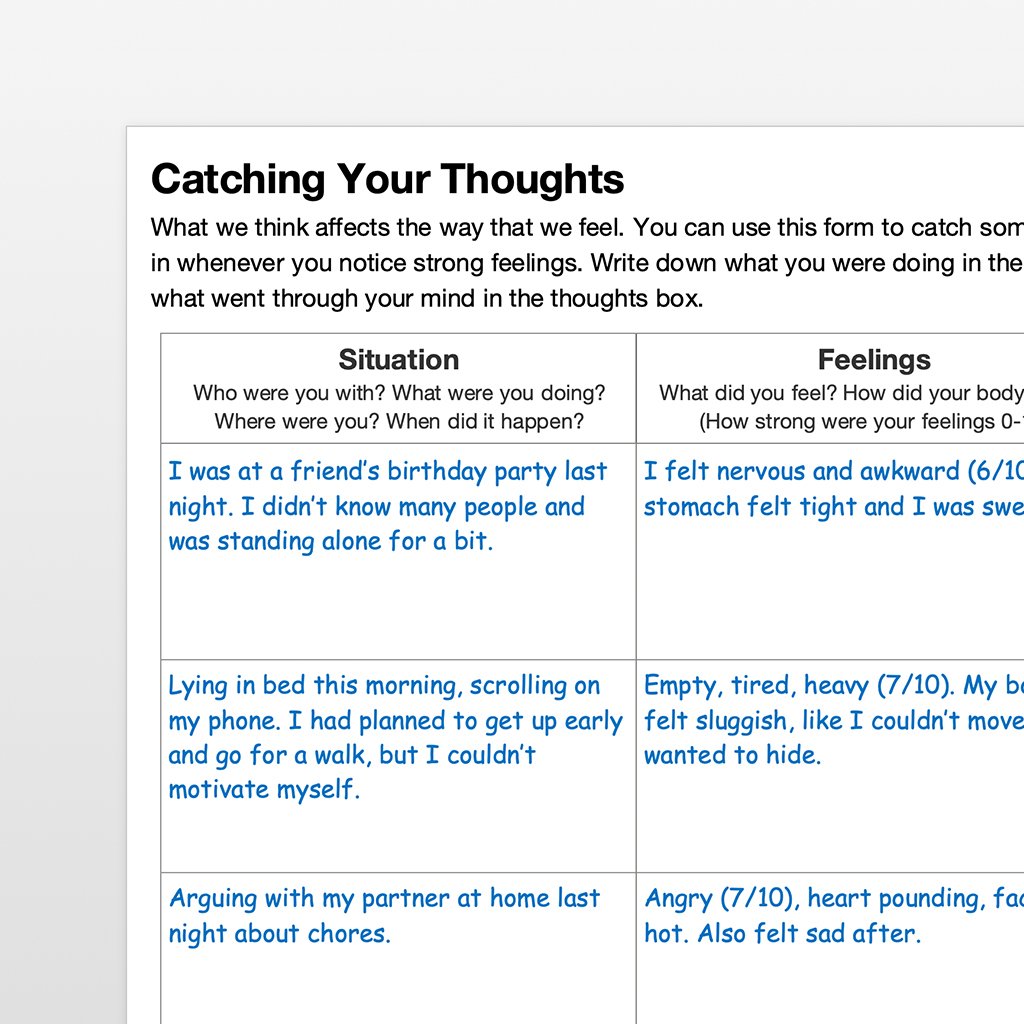
Catching Your Thoughts
This worksheet helps you notice the thoughts that arise alongside strong emotions. By slowing things down and writing them out, it can become easier to see how situations, feelings, and thoughts are connected.
It’s particularly useful during moments of emotional intensity, when thoughts can feel automatic or overwhelming. The aim isn’t to judge or change what you notice straight away, but to build awareness and understanding over time.
Download Catching Your Thoughts Worksheet | Word File
Download with examples | Word File
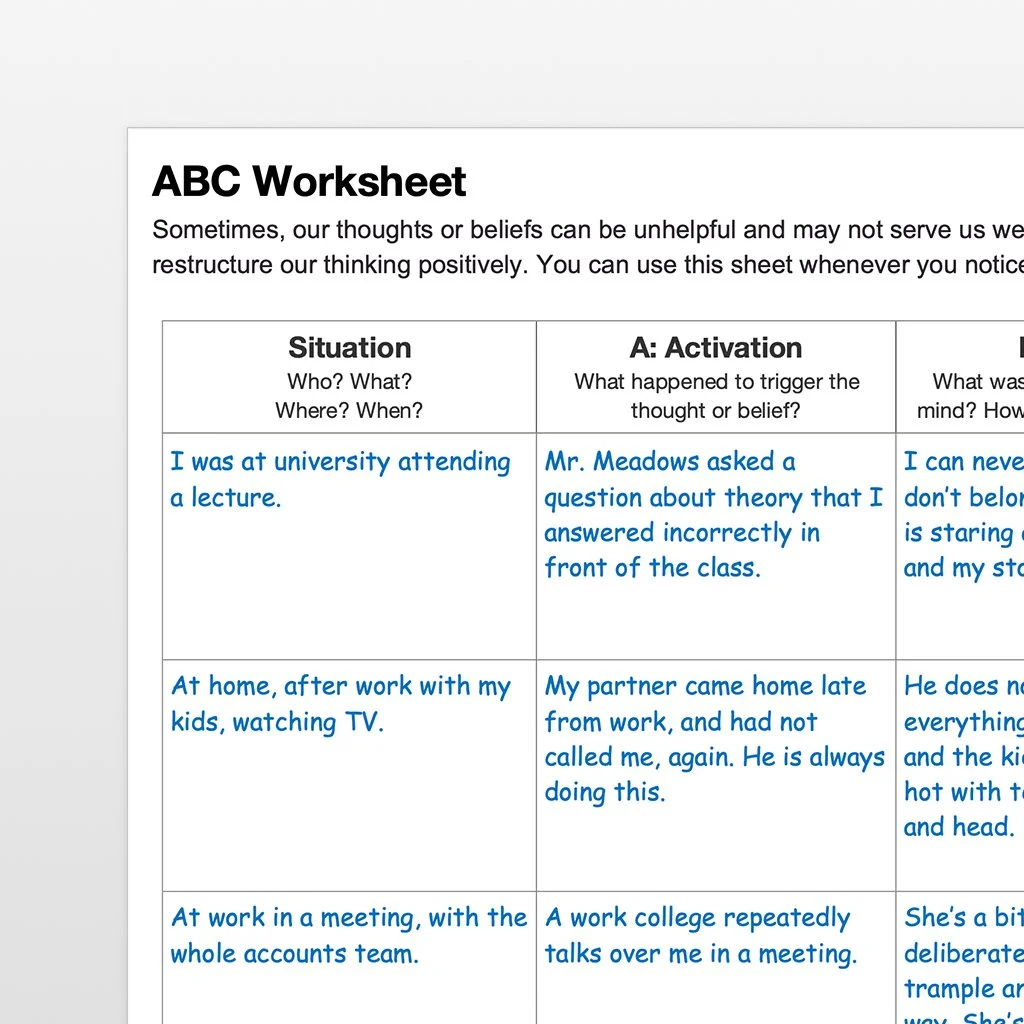
ABC Worksheet
This worksheet helps break down how situations, thoughts, and emotional responses are linked. It offers a simple structure for exploring what happened, what went through your mind, and how this affected how you felt and responded.
Using the ABC format can make anxious or unhelpful thinking patterns easier to notice, especially when reactions feel automatic or hard to explain. The focus is on understanding your experience more clearly, rather than trying to change it straight away.
Download ABC Worksheet | Word File
Download with examples | Word File
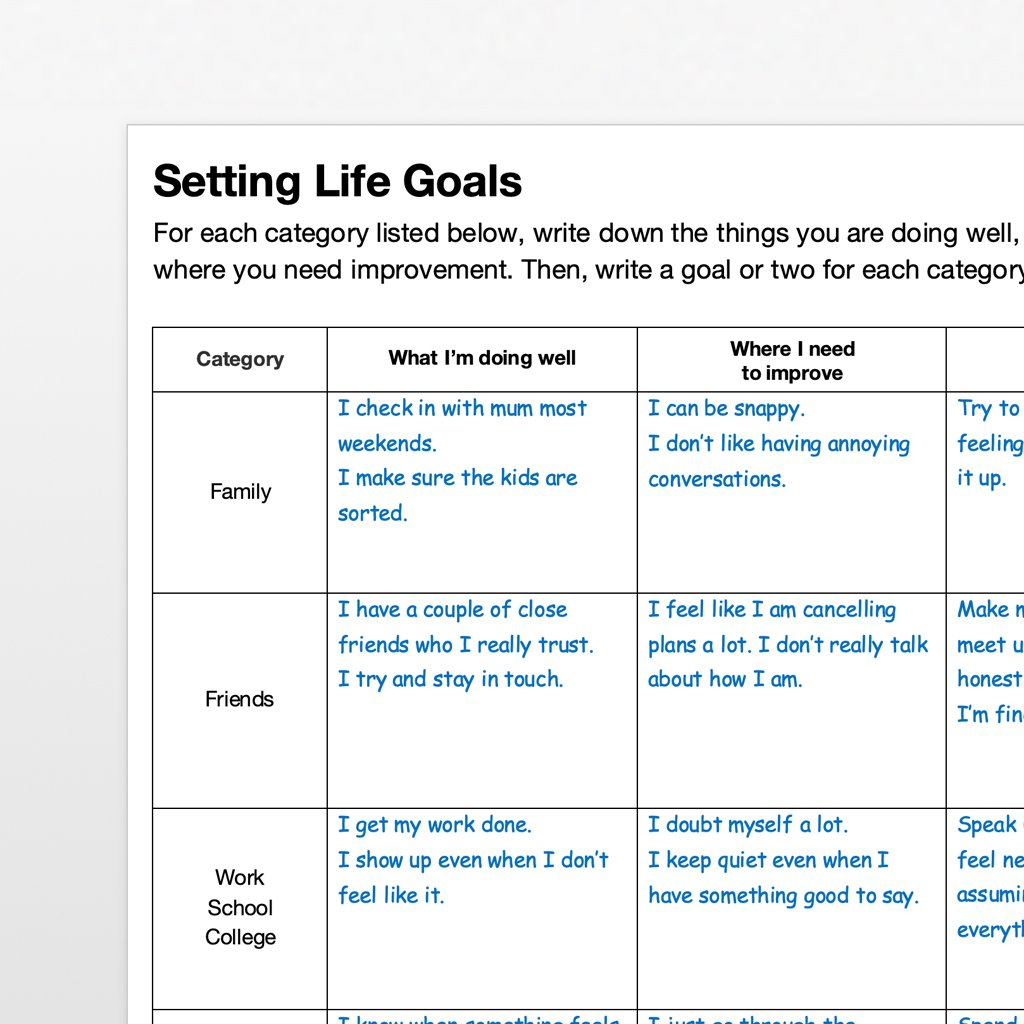
Setting Life Goals
This worksheet is a simple way to take stock of different areas of your life. It can help you notice what feels okay, what feels difficult, and where you might want things to be different.
The goals don’t need to be big or impressive. Small steps are often enough. You can use this sheet to get things out of your head or notice patterns.
You don’t need to have answers for everything. Write down whatever comes to mind, or leave sections blank. You can come back to it later if things change.
Download Setting Life Goals Worksheet | Word File
Download with examples | Word File
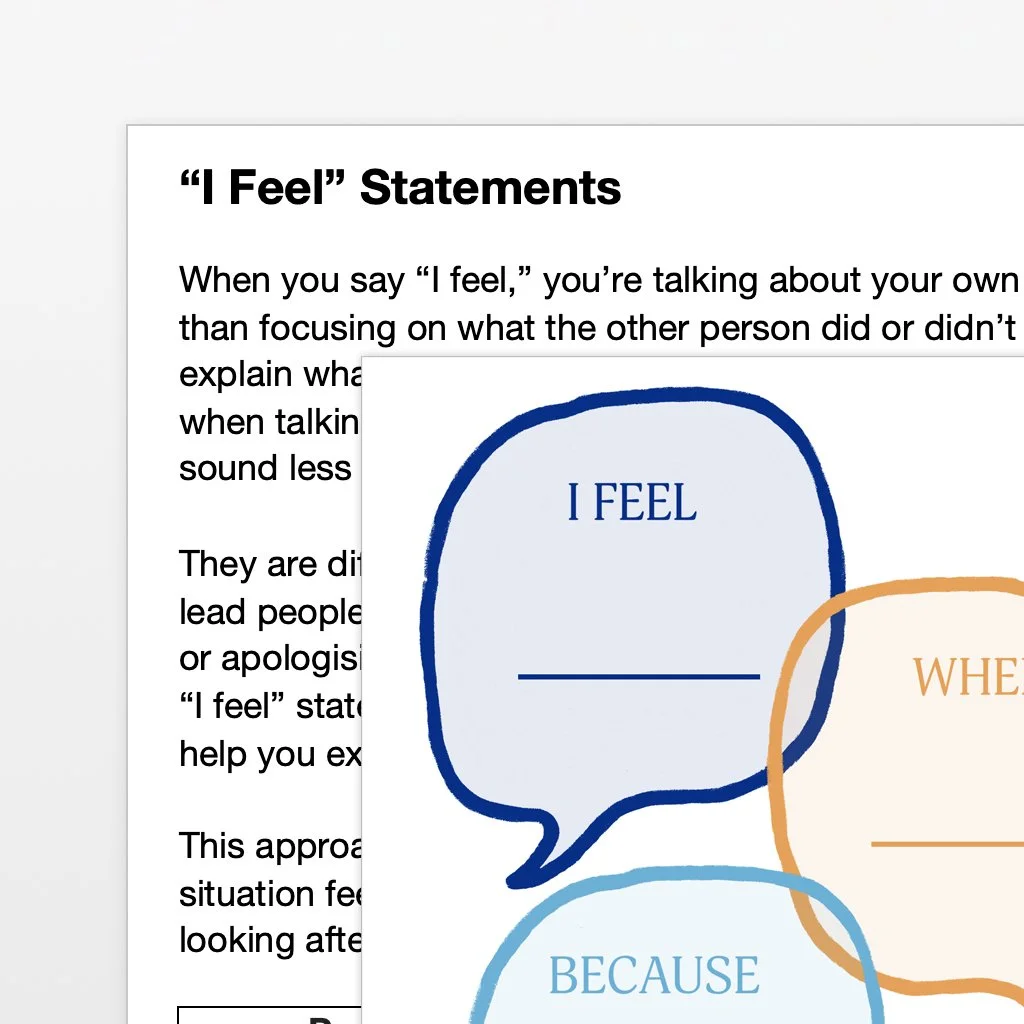
“I Feel’ Statements
This worksheet offers a simple way to talk about feelings without blaming or escalating conflict. It focuses on describing your own experience, rather than what someone else has done wrong.
“I feel” statements can be helpful when conversations feel tense or stuck. You can use this worksheet to practise wording things differently, or to reflect on how you communicate with others.
Download I Feel Statements Worksheet | Word File
Download with examples | Word File
Personality and Assertiveness
This handout looks at different ways interactions can play out, including passive, passive aggressive, aggressive, and assertive styles. These patterns can show up in relationships, at work, or in everyday situations, and are often influenced by the people involved and the context we are in.
Most of us move between these styles at different times. The aim is not to label yourself or take blame, but to notice what tends to happen in certain interactions and how it affects everyone involved. This can help make sense of difficult dynamics and open up other ways of responding.
You can use this as something to reflect on in your own time, or bring it into counselling to explore together.
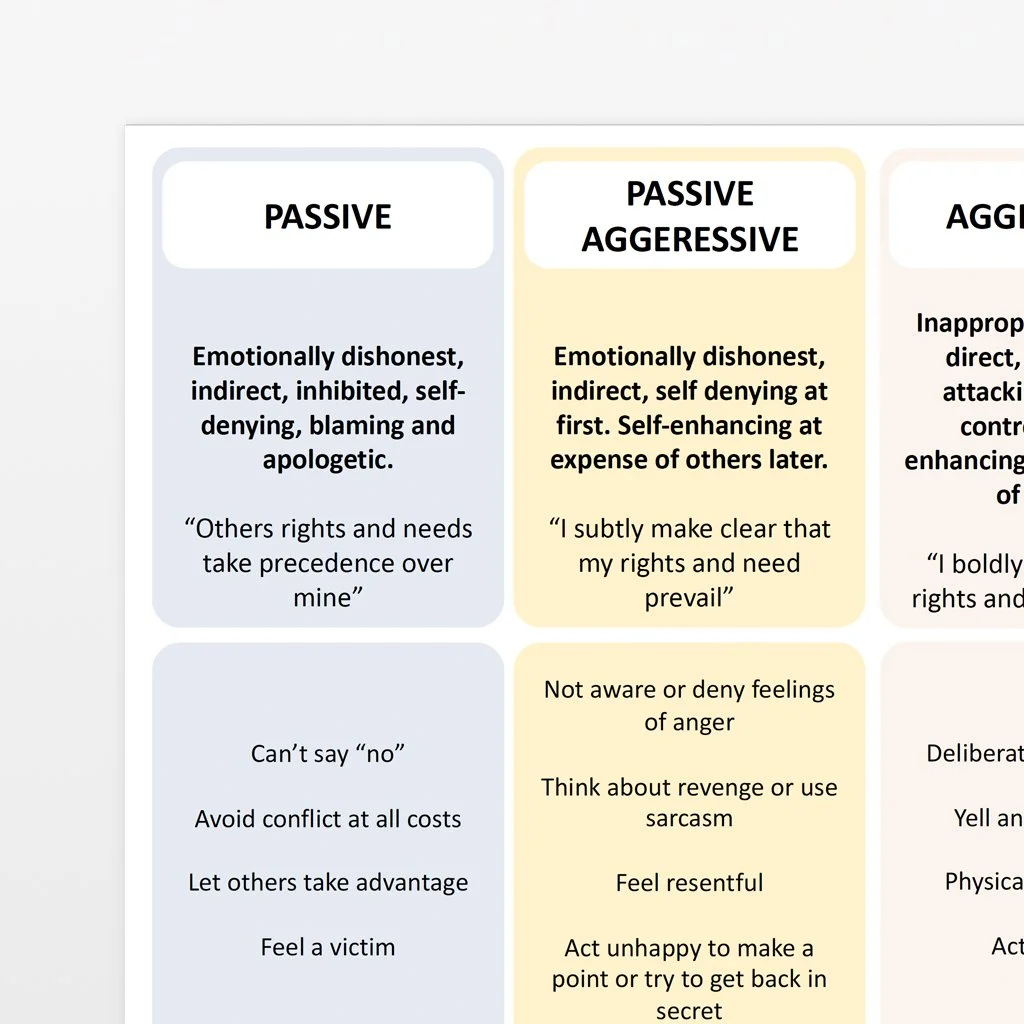
Download Personality and Assertiveness Handout | PDF File
Notes
The worksheets and tools on this page are informed by established counselling and psychological approaches, including Cognitive Behavioural Therapy (CBT), goal-setting and values-based work, emotional awareness, and assertiveness skills.
They are intended to support reflection and therapeutic work, and have been adapted for use in counselling settings.